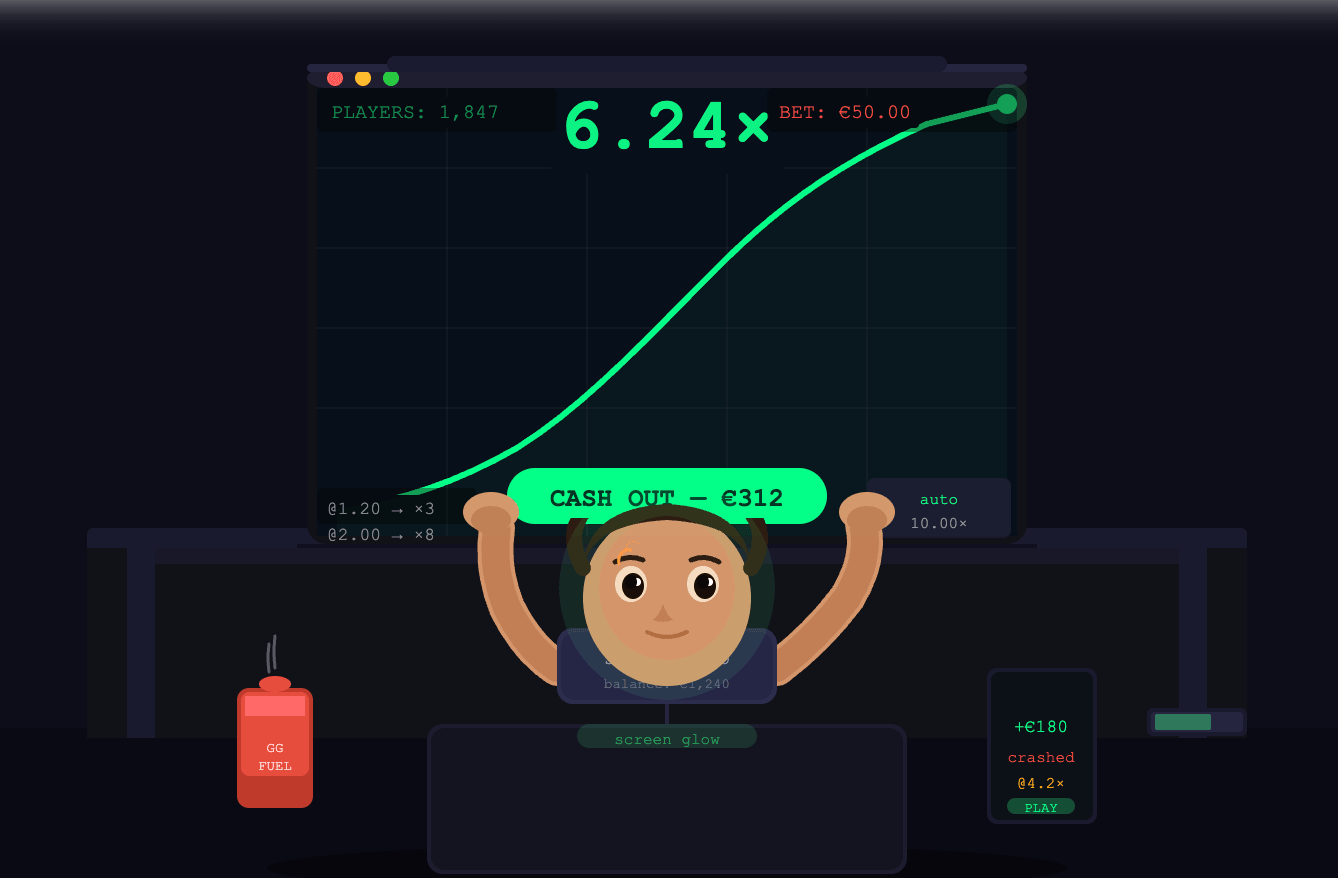
Log into almost any major online casino today, and you’ll find something that wouldn’t have been there two years ago. We are talking about a quest log, a clan leaderboard, or a character you’ve been customizing for the past month. Of course, traditional online gambling is still available, but it is surrounded by multiple layers of game design that make gamblers return to this casino again and again.
It is expected that the revenue in online gambling will reach $655 billion in 2026. So this means that online casinos fighting for a slice of that are no longer competing only on game variety or welcome bonuses. They’re competing on experience, so they do their best to make users come back to them.
The changes started a few years ago when gambling platforms noticed that younger players weren’t sticking around. They did sign up, grab a welcome bonus, play for a couple of weeks, and leave. The old loyalty system, lucrative promos, and a variety of deposit options were not the reasons for them to stay. Here’s what is going on now.
The Loyalty Program That Stopped Working with Gamification

The traditional casino loyalty loop was very boring. Gamblers need to play enough, earn enough points, and get a reward, and that was all. VIP tiers with names like Gold and Platinum added a little polish, but the underlying mechanic never changed. You come to the gambling platform, sign up, and probably, you can get some extra perks; gamblers didn’t expect to earn more. The thing is that for the older generation, it worked fine, but for those who grew up playing Minecraft or Fortnite, it felt flat.
Those players were used to daily quests, progression bars, seasonal content, and visible signs that their time was building toward something. So, it’s clear that a cashback counter doesn’t compete with that.
By mid-2025, several major operators were openly reporting that players under 35 were churning out of loyalty programs at higher rates than older demographics. And the main problem was around games. See the table below that compares both models.
| What Changed | Old Model | 2026 Model |
| How you earn rewards | Deposit and play volume | Completing quests and challenges |
| How fast rewards arrive | Weekly or monthly | Instantly, in real time |
| Personalization | Same tiers for everyone | Tailored to individual behavior |
| Social features | Mostly absent | Clan systems, live leaderboards |
| Player choice | None | Players pick their own progression path |
What Replaced the Old Model
Let’s take a closer look at the main concepts that changed everything and brought the online gambling industry to the next level.
Quests and Narrative Layers
The main difference is the quest system. For instance, a player in a live blackjack session should be focused on many more aspects than just playing the game. They work through a week-long challenge where hitting certain milestones, such as three blackjacks in a session, five consecutive wins, gets more bonuses as they progress.
The thing is that the quest system gives the session a feeling of building toward something, whether the player is up or down financially. This approach has become especially common around popular slot titles such as Jammin’ Jars, Mega Moolah, or Book of Dead, where players are encouraged to complete challenges and unlock additional rewards. Platforms that introduced quest systems in 2025 saw a 34% increase in average session length for players who engaged with them, and a 41% higher 30-day return rate than players who didn’t. So, we can see that it works!
Clans and Social Competition
For decades, gambling was a solo activity, but this industry required some changes. More players are looking for a social element, and casino clans deliver that. These are like guilds in an MMO. Simply put, you need to join a group, chip in toward shared weekly goals, and compete against other clans on live leaderboards. When you’re part of an active clan, your absence matters to the group. This keeps players coming back to the gambling platform more consistently than personal wins.
RPG-Style Progression and Personalization
We also couldn’t pass by personalization, and it is the most durable change. Previously, all gamblers had to climb the same Bronze-to-Diamond tier ladder. Online casinos now build individual progression paths, and this is where a lot depends on a player’s preferences and playing style. A poker player gets a different skill tree, different challenges, and different perks than a slots player, who may spend most of their time on titles such as Buggalo Gold or Starmania slots. In this case, both players are progressing, but both go different paths.
When a player has spent months building a character, earning badges, and customizing a profile, the cost of leaving is their entire in-platform identity. See the table below to learn more.
| Feature | Session Length Increase | 60-Day Retention Lift |
| Quest systems | +31% | +38% |
| Clan leaderboards | +19% | +44% |
| RPG leveling | +26% | +35% |
| Personalized avatars | +12% | +29% |
| All features combined | +47% | +61% |
The Tech Making Gamification Work

However, none of these features runs on a rule-based logic. The thing is that casino gamification is built on AI models that do their job. They keep track of the player’s behavior in real time, monitor their session pacing, and how they use bonuses and respond to different reward types. After that, the data is used to determine which rewards to offer this player. The main goal is to create a personalized reward system that always feels more personal. As a result, a player is more motivated to continue playing. On top of that, a user who responds to leaderboard position gets rank notifications at moments when they’re most likely to re-engage.
On the infrastructure side, several platforms operating in crypto-friendly jurisdictions have started issuing loyalty rewards as on-chain assets. Quest rewards and rare cosmetics are available in a player’s wallet. Players perceive these as genuinely owned, which increases their value.
Is This Sustainable?
The retention numbers are real. Platforms that have fully implemented gamified loyalty systems are seeing 60-day retention improvements that legacy cashback programs never came close to.
But there are genuine questions about where this goes. European gambling regulators issued preliminary guidance in early 2026, flagging that certain gamification mechanics (ones that blur the line between financial reward and game reward), may require new consumer protection disclosures. That conversation will create friction for some implementations over the next year or two.
There’s also a competitive problem: once every platform has a clan system and a skill tree, none of them has an advantage from it. The operators who built these systems early got a real edge. The ones building them now are just keeping pace.
What’s not going away is the expectation. Players under 35 now assume there will be a progression system. They assume there will be something to work toward beyond the next spin. The platforms that understood that early are in a strong position. The ones still running a points-for-cashback loop are going to keep losing that demographic to the ones that did.